
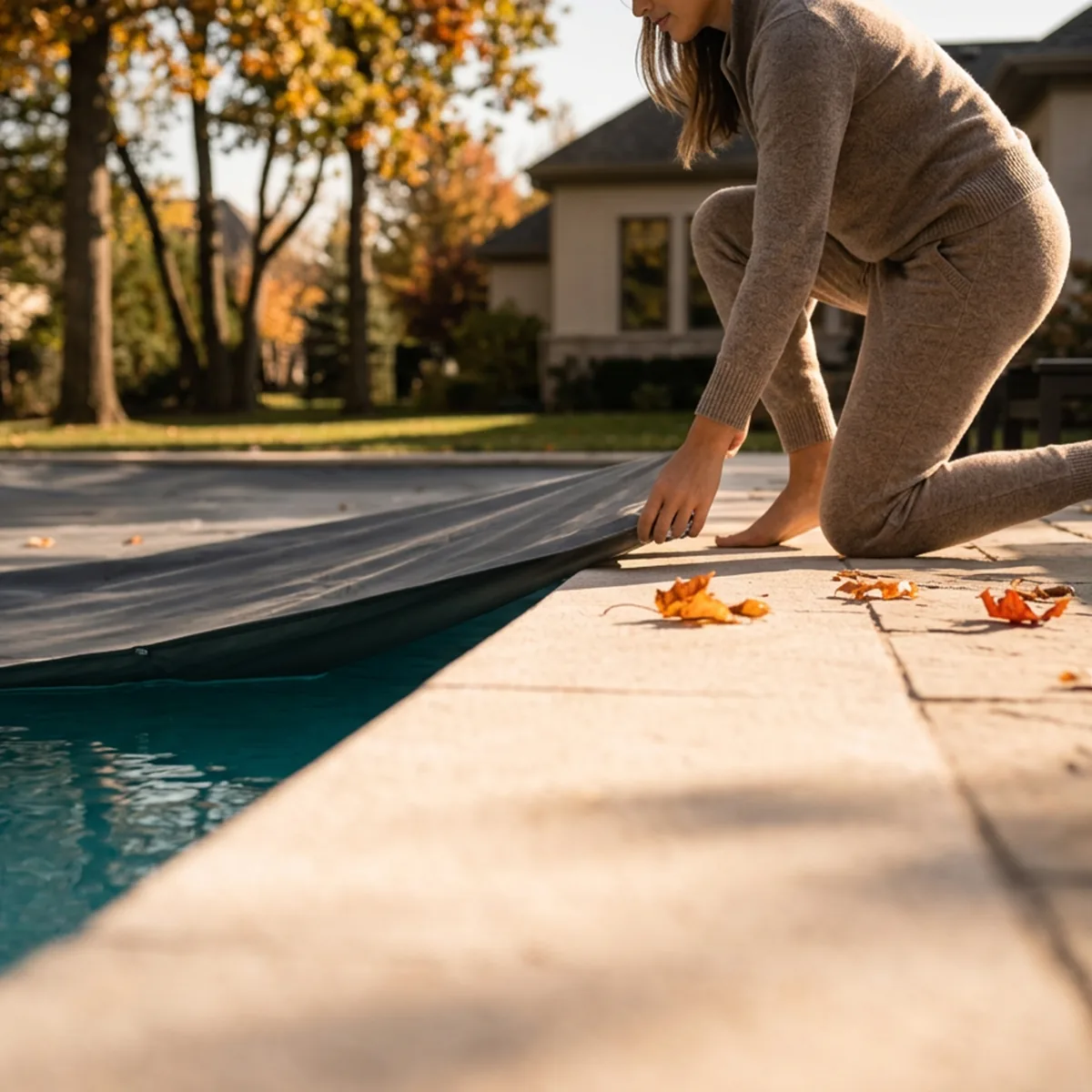
Closing your pool isn’t the end of the season — it’s the beginning of an easier one. Taking a few simple steps now helps protect your pool over the winter, so you can look forward to a cleaner, smoother and more relaxing pool opening next spring. Read on for our pool closing guide that includes:
- Easy to follow steps
- Expert tips
- The benefits of winterizing your pool
Pool Closing Made Easy: A Step-by-Step Guide
1. Choose the right time to close your pool
One of the most common pool-closing questions is: When should I close my pool?
The ideal time is when outdoor temperatures consistently stay between 50°F and 60°F and your pool water temperature remains below 65°F.
Why does timing matter? Cooler water slows the growth of algae and bacteria, making it easier to maintain clean water throughout the off-season.
Many pool owners consider Labor Day the unofficial end of pool season, but depending on your location, that may be too early. Closing a pool while the water is still warm can create ideal conditions for algae growth.
At the same time, waiting too long can be risky. Unexpected freezing temperatures may damage pool equipment and plumbing.
The goal: Close your pool when the water is cool enough to discourage algae growth but before freezing temperatures arrive.
2. Give your pool a thorough cleaning
Before closing your pool, remove all leaves, acorns, dirt and debris.
Anything left behind over the winter will continue to break down, stain surfaces and create extra work when you open the pool in the spring.
Skim the surface, brush the walls and vacuum the pool thoroughly. If your yard has lots of trees, consider keeping the pool covered as leaves begin to fall to reduce cleanup.
3. Start preparing 1 week before closing
Giving yourself a week to prepare can make closing day much easier.
A week before closing:
- Remove all debris and thoroughly brush and vacuum the pool
- Pay special attention to steps, corners and other hard-to-reach areas where algae can hide
- Empty and clean skimmer and pump baskets
- Add an algaecide such as FROG® 90-Day Algae Barrier® to help protect against algae during the off-season
- Test and balance the water:
- Free Chlorine: 1.0 – 3.0 ppm
- For pools using FROG® products: 0.5 – 1.0 ppm
- Total Alkalinity: 80 – 120 ppm
- pH: 7.4 – 7.6
- Total Hardness: 250 – 400 ppm
- Free Chlorine: 1.0 – 3.0 ppm
- Shock the pool 1 – 3 days before closing, following product directions
- Run the pump through a complete circulation cycle
- Backwash or chemically clean the filter
4. Lower the pool’s water level
If you live in a region with freezing temperatures, lower the water level to help prevent freeze damage.
- Vinyl-lined pools: Lower water 4 – 6 inches below the skimmer
- Plaster pools: Lower water 4 – 6 inches below the tile line
If you live in a warmer climate, water can typically remain at normal levels. However, if freezing temperatures are forecast:
- Remove unnecessary equipment
- Cover the pool
- Run the pump continuously to keep water moving
- Contact your local pool professional for guidance
5. Remove and clean pool equipment
Removing equipment seems obvious, right? But it can be easy to forget or put off, especially with busy schedules.
Remove pool noodles, floats and toys and functional equipment including skimmer baskets, ladders, sanitizing floaters and hoses.
Clean all equipment you just removed. If not, it’s subject to chemical corrosion, scale buildup or could introduce algae and bacteria into the water when you open it in the spring.
Once your equipment is clean, store it indoors to avoid wear and tear during the off season.
6. Drain all pool lines
For those in freezing temperature zones, once you drain pool lines, add antifreeze.
Drain all water from the pool pump, filter, heater and sanitizer.
Remove the equipment drain plugs. You can use a small shop vac to blow any remaining water from the pump and filter. Store your drain plugs where you will easily find them in the spring.
7. Add winterizing chemicals
One of the most important winterizing chemicals is algaecide. When you use an algaecide, you limit algae buildup during the wintertime, making spring opening time much easier.
Algae is arguably the number one pool problem. Prevention is the best way to avoid the mess, time and expense required to get rid of it.
We recommend FROG® 90-Day Algae Barrier® – it prevents black, green and yellow algae. Pods come pre-filled; simply drop them into the skimmer basket.
Water Care Expert Tip: Before putting algaecide in your pool, use a chlorine shock. A chlorine shock will sanitize the water so that the algaecide can do its job effectively.
8. Cover your pool
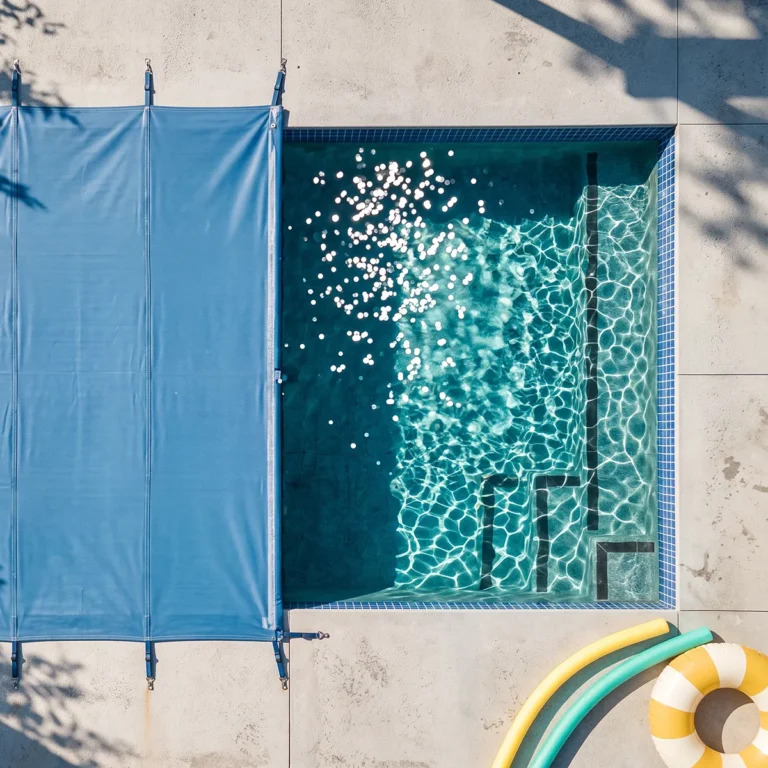
In areas with harsh winter conditions, investing in a high-quality pool cover to protect your pool from the elements is optimal. Look for sturdy material, reinforced durable straps and anchors along the pool edges.
Most important: A pool cover is a long-term investment; invest in a pool cover that fits your pool and comes with a reliable warranty. Call your local retailer for help.
For above-ground pools, place an air pillow in the center of the pool under the cover. This absorbs the freezing water pressures to protect the pool walls.
9. Monitor year-round pools
If you live in a warm climate, you may use your pool all year long. In that case, follow your usual pool maintenance routine.
Even in climates well above freezing, you may use your pool less during the winter. If so, monitor the water balance monthly so your pool is ready when you are.
7 Reasons to Close Your Pool
1. It protects your pool equipment
Winter weather can cause significant damage to pool equipment from pumps to filters and heaters if they are not properly winterized. Freezing temperatures can lead to cracked pipes, motor damage and other costly repairs. When you winterize your equipment, you avoid this altogether.
2. It prevents water damage
When your pool is not properly closed, water can freeze and expand, leading to cracks in the pool’s structure. When you monitor your water level, there’s no need to worry about water damage.
3. It minimizes maintenance costs
A properly closed pool requires less maintenance during the off-season. Take the time to close the pool correctly, and you can save money on chemicals, cleaning and repairs.
4. Avoid algae and bacteria growth
Closing your pool when the weather is cool and water temperature is 65◦F or below is a good algae preventive. And treating your pool with a high-quality algaecide for the winter stops algae and bacteria in their tracks. Then, spring opening is much easier.
5. It extends your pool’s lifespan
When you close your pool properly, you help extend its overall lifespan. Regular maintenance and proper winterization can prevent premature wear and tear and save you money in the long run.
6. It keeps you and others safe
When you close your pool, you avoid safety risks. A pool cover protects curious children or animals, if they should happen to check out the pool or pool area. It also protects your pool water and surfaces.
7. You’ll have a smoother pool opening
When you close your pool correctly, it makes the opening process easier and quicker when warm weather returns.
In summary, properly closing your pool is essential to protect your investment, ensure a safe environment and make your pool opening process easy!
Pool Closing Secrets Revealed
When you follow the steps and tips outlined above, you will enjoy the benefits of your time and effort to properly close your pool. Your careful attention to detail will pay off with a pool that needs less work to open and is only a few steps away an inviting pool when spring arrives. Happy pool closing!
Have more pool closing questions? We’re happy to help! Call us at 800-222-0169 or email us at customer.service@kingtechnology.com
We also have a chat box on our website for quick and easy answers – try it out!