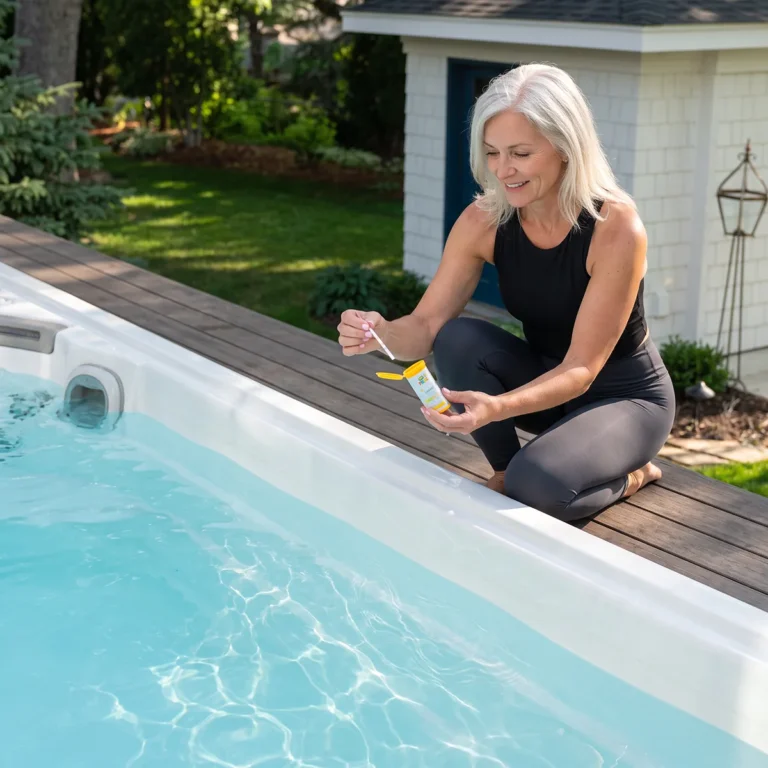


Maintaining the ideal level of Total Hardness in your hot tub or swim spa is just as important as balancing pH and Total Alkalinity. This article will help you keep your Total Hardness balanced and your equipment protected.
The ideal Total Hardness range for hot tubs and swim spas is 150–250 ppm (parts per million).
What is Total (Calcium) Hardness?
Total hardness (also called Calcium Hardness) measures how much calcium and magnesium are in your water. Keeping your hot tub or swim spa’s Total Hardness levels balanced prevents corrosion and scaling.
Low Total Hardness Levels
When Total Hardness levels in a hot tub or swim spa are too low (below 150 ppm), the water can become corrosive. Without enough calcium and magnesium in the water, it may begin to draw minerals from surfaces and equipment, potentially damaging metal components, grout, concrete and other materials over time.
Here are some of the common problems caused by low Total Hardness:
- Corrosion of heaters, pumps and pipes
- Etching and pitting of surfaces
- Damage to grout, stone and concrete
- Pitting of hot tub walls and flooring
Important: Damage caused by low calcium hardness cannot be reversed — it must be repaired or replaced.
How to Increase Total Hardness in Hot Tub or Swim Spa:
- Add a calcium hardness increaser
- Turn on the jets for circulation
- Let water mix for several hours
- Retest and repeat as needed
High Total Hardness in Hot Tub or Swim Spa
When Total Hardness levels in a hot tub or swim spa are too high (above 250 ppm), excess minerals, primarily calcium, can build up in the water. Over time, these minerals can come out of solution and form scale on surfaces and equipment, especially when pH is also high.
Problems caused by high Total Hardness can include:
- Cloudy or dull water
- White, chalky scale on surfaces and equipment
- Clogged filters and pipes
- Reduced water circulation
- Long-term equipment damage
How to Lower Total Hardness in a Hot Tub or Swim Spa
- Partially drain the water
- Refill with fresh water
- Retest and rebalance water
Can You Increase Total Hardness Naturally?
The safest and most effective method is using a calcium-based increaser. Household alternatives are not recommended because they can throw off water balance. FROG SooTHe™ raises calcium hardness to the ideal range. The FROG TruDose Cap™ and easy-to-follow dosing instructions take out the guesswork around how much product to use.
Pro Tips for Managing Hot Tub or Swim Spa Total Hardness
- Test water 1–2 times per week
- Keep Total Hardness between 150–250 ppm
- Always adjust Total Alkalinity and pH first
Maintaining proper Total Hardness in your hot tub or swim spa protects your equipment, improves water clarity and ensures a better soaking experience.
See, Feel and Smell the Difference
FROG® Sanitizing Systems transform your hot tub or swim spa by combining proprietary FROG Sanitizing Minerals® with low levels of chlorine to destroy bacteria. The result is Fresh Mineral Water®∞, our signature water quality experience that’s gentler on skin and free from the harsh, over-chlorinated feel of traditional hot tub care.
- Uses up to 75% less chlorine*
- Creates water that is cleaner, clearer and softer
- Easier on skin, swimsuits and hot tub surfaces
- No harsh odors
* Compared to the minimum ANSI recommended chlorine level of 2.0 ppm for a hot tub or swim spa
∞ Cleaner, Clearer and Softer water for pools, hot tubs and swim spas