

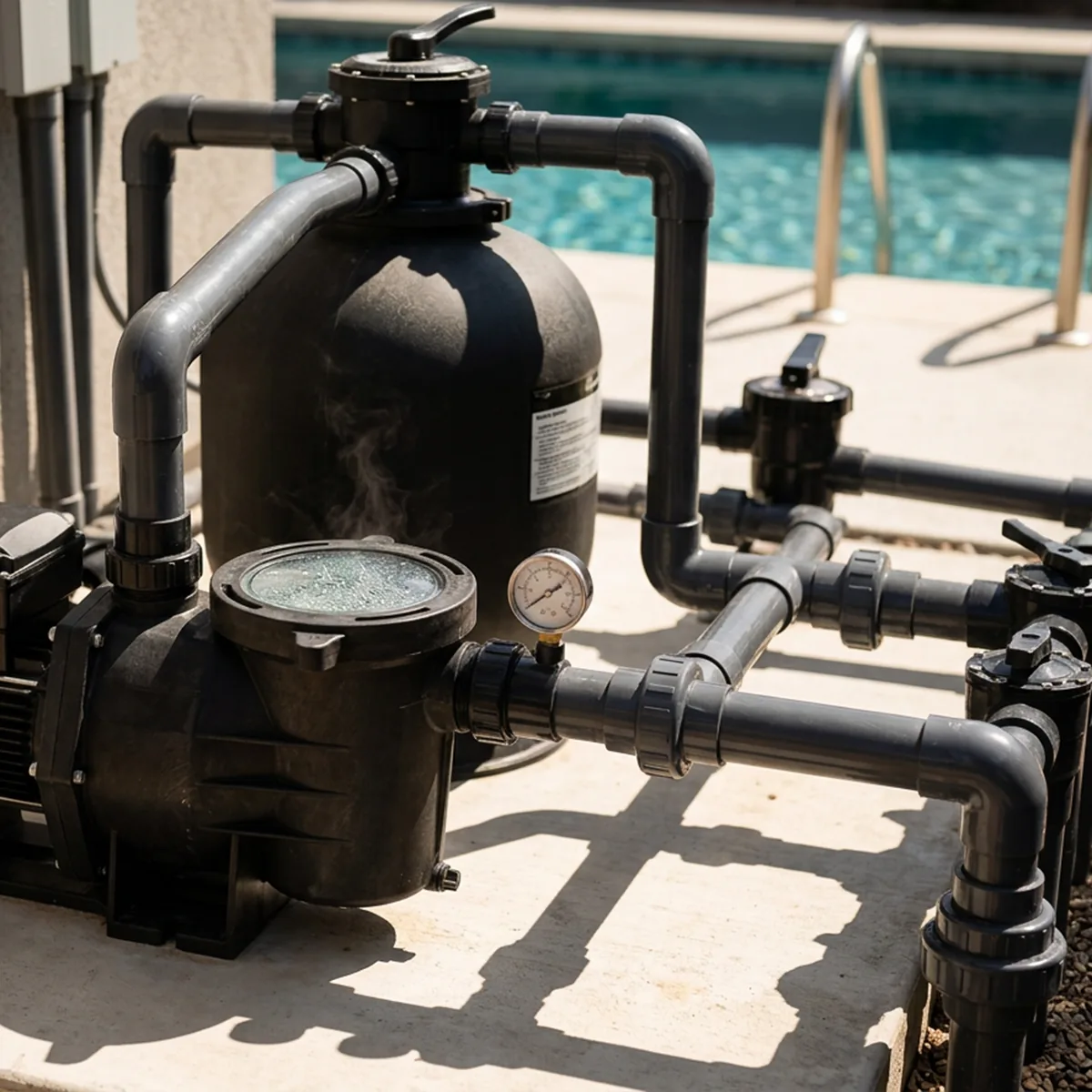
Pool pumps use a lot of power, which means they naturally generate heat during normal operation. Add direct sunlight and hot summer temperatures, and it’s not unusual for a pump motor to run warm.
If your pump is less than seven years old and starts having performance issues, overheating could be the cause. In most cases, excess heat results from electrical problems, restricted airflow or increased friction inside the pump.
How Hot Is Too Hot?
Pool pump motors normally run hot. In fact, the motor housing is often warm enough that you can only touch it briefly. However, if the motor is so hot that you can’t comfortably rest your hand on it, there may be an underlying problem.
Heat-related damage tends to worsen over time. A pump may continue running for weeks, months or even longer after overheating begins, but the extra heat can gradually damage internal components and eventually lead to failure.
Common Causes of Pumps Overheating
Friction
Pool pumps contain several moving parts, and all of them create some friction and heat. Under normal conditions, the pump is designed to manage that heat.
One of the most common causes of overheating is worn or damaged bearings. Rusty bearings often produce a high-pitched squealing noise and are frequently caused by water leaking into the motor.
If you notice a leak or hear unusual noises, have the pump inspected before the damage gets worse.
Lack of Airflow
Most pool pump motors rely on airflow to stay cool. A fan inside the motor pulls air through the housing to carry heat away from the electrical components.
When a pump is installed in a tight, enclosed space with poor ventilation, the surrounding air can become too warm to provide effective cooling. Over time, this can significantly shorten the life of the motor.
Suction-Side Restrictions
A pump works most efficiently when water can flow freely into it. Restrictions such as tight plumbing layouts, elbows, valves, check valves or other fittings installed too close to the pump can create turbulence and make the pump work harder. The harder the pump works, the more heat it generates.
Pressure-Side Restrictions
Restrictions on the return side of the system can also increase operating temperatures. Undersized filters, clogged equipment or plumbing that’s too small for the pump can force the motor to work harder than necessary. Just as riding a bike into a strong headwind requires more effort, pushing water through a restrictive system puts additional strain on the pump.
What To Do If Your Pump Is Overheating
If you suspect your pump is overheating, have it inspected by a pool professional. They can identify whether the issue is caused by worn components, restricted airflow, plumbing design or a pump that’s improperly sized for the pool.
In some cases, improving the installation or upgrading to a more appropriate pump can improve efficiency, extend equipment life and reduce future maintenance issues.