
Are you planning to drain your swim spa?
Or are you starting it up for the first time?
Either way, you’re in the right place!
Follow our essential start-up steps so you can swim and relax in your swim spa with clean, clear water and confidence!
Filling Your Swim Spa for the First Time?
If you’re filling a new swim spa for the first time (congrats!), we suggest purging it first. All swim spas are water-tested before they leave the shop (thank goodness, you don’t want to find your new swim spa has a leak). However, after it’s drained, some trapped water remains that can overtime cause biofilm to form. Purging before use helps set you up for success!
Draining and Refilling?
If you’re thinking about draining and refilling your swim spa, or in the process of it, you might also want to purge your swim spa.
How to Start-up a Swim Spa
Once drained, you’re ready for swim spa start-up – and the first step is to clean it.
Step 1: Clean and Rinse
Cleaning includes all swim spa surfaces. Thorough cleaning is crucial because any bacteria or tiny algae spore left behind could easily get into the water, where it will multiply and cause murky, cloudy, smelly or green water.
Clean the shell (the actual tub or the hard surfaces of your swim spa). And clean the cover inside and out. Also clean the swim spa pillows, rails, steps, seats, inside the jets, the exterior of the swim spa … every surface, crevice and corner.
Bacteria and algae will cling to any possible surface, especially the surfaces hardest to reach!
Then, rinse the surfaces thoroughly so no cleaning solution residue is left, this will prevent any unwanted foam in your swim spa later.
Expert advice: Use a non-abrasive cleaning solution with a RANA® Estropajo to keep your shell safe from scratches! It’s powerful and strong enough to tackle tough grime, but gentle enough not to damage your swim spa!
Step 2: Filter Care – Clean or Replace
The filtration systems in swim spas help keep water clean and clear by removing debris.
Clean or replace filters regularly to ensure efficient water circulation. This helps maintain the quality of water in your swim spa.
Step 3: Fill it Up
Before you fill your freshly cleaned swim spa with water, it’s a great idea to take a sample your fill water to your local retailer to check for Total Hardness (also known as Calcium Hardness). If it tests higher than 250 ppm, here are two solutions:
- Put a hose filter on the hose you use to fill the swim spa and then fill it.
- Fill the swim spa with water as is and then add descalers or metal-out products to help bring Total Hardness down.
When you fill your swim spa, ensure the water level is above the jets but below the skimmer. Be cautious not to overfill your swim spa, as the water level will rise when people get into it.
Step 4: Turn Up the Heat
Heat water to the swim spa manufacturer’s recommended temperature. For swimming and working out, maintaining a temperature anywhere between 80°F and 84°F will keep you comfortable without overheating.
If you’re relaxing, most people enjoy a temperature between 87°F and 102°F.
Of course, you can always adjust your swim spa’s temperature based on your personal preference.
Heating times vary, but it typically takes several hours to reach your desired temperature. Generally, water temperatures typically increase by 5°F – 10°F per hour. Take note, however, that this will vary depending on several things including the size of your swim spa, whether it’s indoors or outdoors and what the water’s starting temperature is.
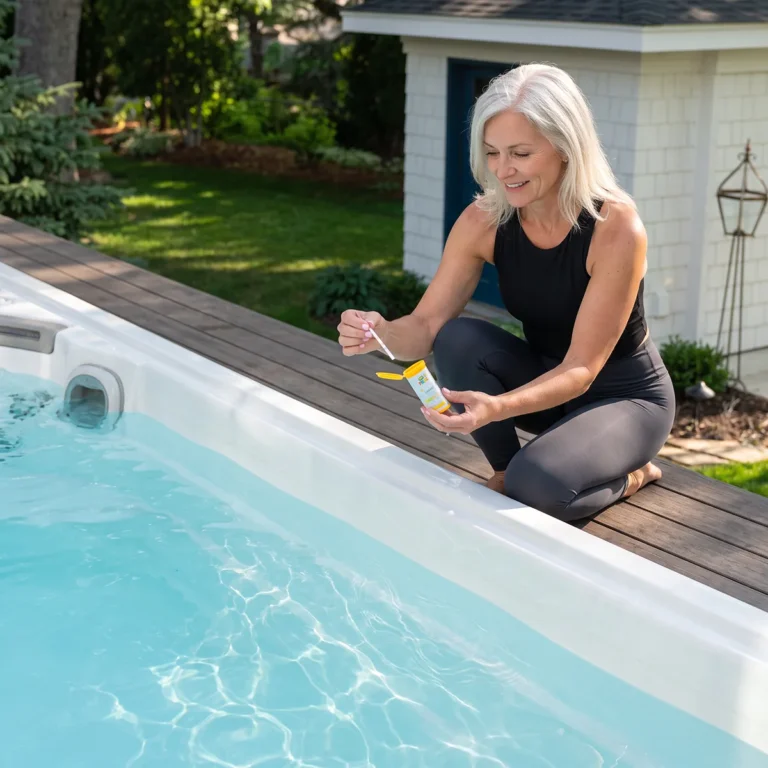
Step 5: Balance the Water
This is the most important step of swim spa start-up, for several reasons:
Balanced water is the key to proper sanitization. If you keep your water balanced, your swim spa will not only be cleaner, but it will also protect your investment.
Water that’s out of balance, whether it’s Total Alkalinity, pH or Total Hardness, can not only make relaxing in your swim spa uncomfortable, but can also permanently damage the walls, equipment and other surfaces around your hot tub.
Total alkalinity (TA) measures how well your hot tub resists sudden pH changes. It acts as a buffer for pH stability, making it the first thing you should test and adjust before adding chemicals. Even if your water looks fine, imbalanced TA can lead to bigger issues.
Ideal Water Balance Levels
- Total Alkalinity 80 – 120 ppm
Starting with Total Alkalinity first will make it simpler to balance the pH. If your Total Alkalinity tests low, add a Total Alkalinity increaser or TA Up.
If your Total Alkalinity tests high, add the same product that lowers pH – it’s usually called pH Decreaser or pH Down.
- pH 7.2 – 7.6
Proceed to pH only when Total Alkalinity is between 80 – 120 ppm. pH is important to maintain clean, clear water that doesn’t attack surfaces or irritate skin.
If your pH tests low, add a pH Increaser or a pH Up product. If your pH tests high, add a pH Decreaser or pH Down product.
- Total Hardness 150 – 250 ppm
(Total Hardness is also known as Calcium Hardness or Water Hardness, we use the term Total Hardness.) Proceed to Total Hardness only when pH is between 7.2 – 7.6.
Even though you checked your fill water’s Total Hardness earlier, it is important to check Total Hardness again to prevent corrosion of your swim spa’s surfaces. If your Total Hardness tests low, add a Calcium Increaser.
Additional Water Balancing Tips:
- When adding adjustment chemicals, add them in small increments and follow label directions carefully.
- Wait 6 hours between adjustments so your adjustment chemical has enough time to do its job
- If balancing your swim spa takes longer than 2 days, add a chlorine shock to maintain sanitizer levels
- Maintaining water balance is an ongoing process. You must regularly test the water and adjust the chemical levels accordingly
When Total Alkalinity is between 80 – 120 ppm, pH is between 7.2 – 7.6 and Total Hardness is between 150 – 250 ppm, your water is balanced and you’re ready to add your choice of sanitizer.
Try Out the RANA® Conceptos básicos de equilibrio™ Equipo
It includes the five essential hot tub balancing chemicals all in one convenient bundle!
Recomendamos RANA® @facilidad® Sistema de desinfección para piscinas con sistema de natación contracorriente – the first and only complete swim spa sanitizer.
Wellness starts with the water you’re in. FROG® @facilidad® creates Fresh Mineral Water®∞ by using patented mineral technology and a low level of SmartChlor® to keep your swim spa Cleaner, Clearer and Softer®. With up to 75% less chlorine* than traditional systems, you can enjoy water that’s easier on your skin, hair and swimsuits — so every workout, recovery session or relaxing soak leaves you feeling refreshed instead of dried out. Because caring for your well-being should start with caring for your water.
Step 6: Time to Enjoy, Without Worry!
It’s now time to indulge in all the relaxation and exercise you signed up for!
Want to leave all your cares and worries behind? Keep these swim spa safety tips in mind:
Swim Spa Safety Tips:
- Keep hydrated and maintain hydration while soaking by drinking enough water throughout the day
- Never leave children unattended in or by the swim spa
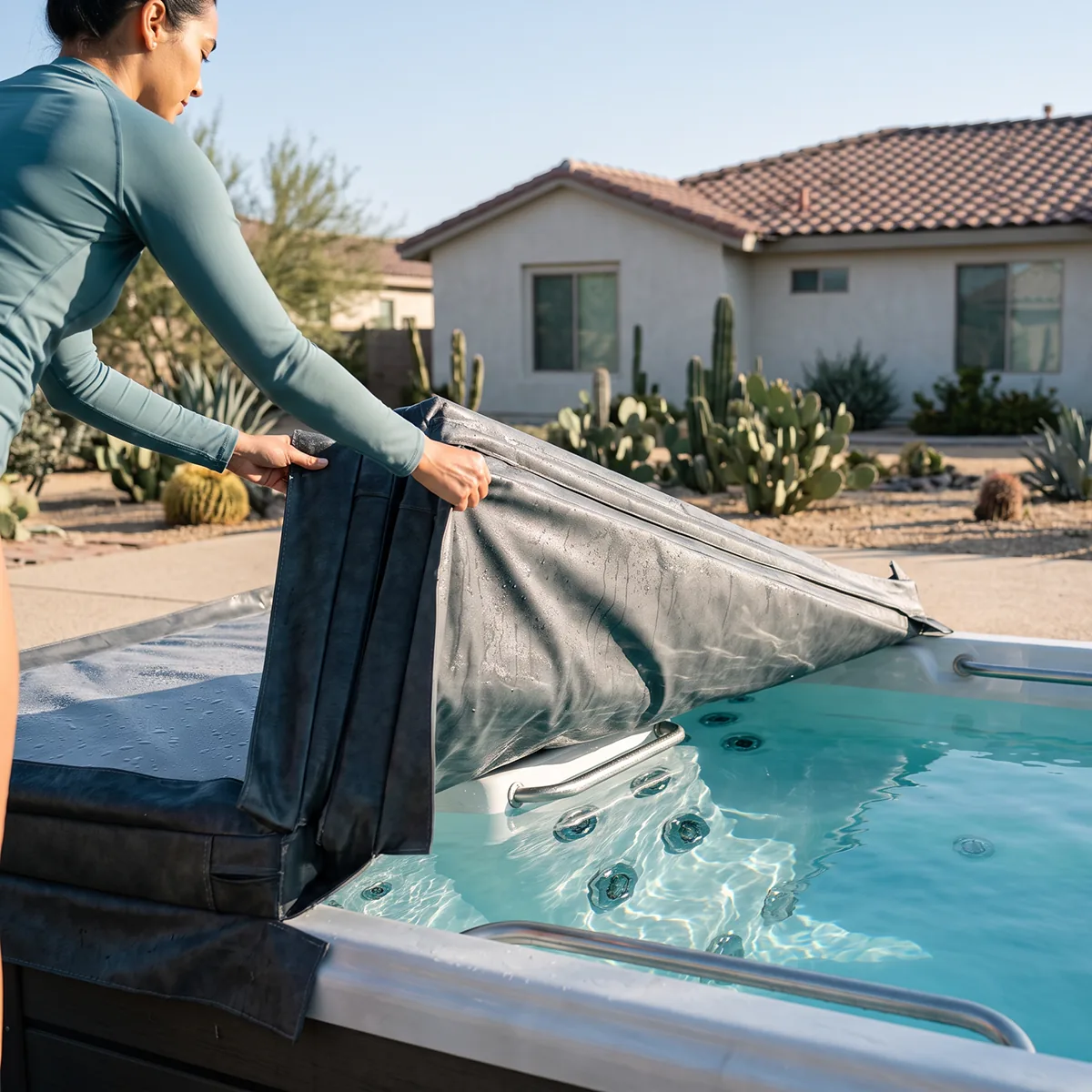
- Keep the swim spa cover on when not in use
- Avoid using the swim spa if you have medical conditions that could be exacerbated by heat
The Start-Up Wrap-Up
That’s it for start-up – now it’s time to enjoy! And thanks to this guide, you can successfully start-up your swim spa and create a special space to relax, rejuvenate, exercise and make memories! Enjoy!
* En comparación con el nivel mínimo de cloro recomendado por ANSI de 2,0 ppm para una bañera de hidromasaje o piscina con sistema de natación contracorriente.
∞ Agua más limpia, cristalina y suave para piscinas, jacuzzis y spas de natación.