
There’s a time for everything – a time to exercise in your swim spa, a time to invite friends for a swim spa party and eventually, a time to purge.
While purging your swim spa doesn’t top the “Fun things to do this weekend list,” it does top the “Glad I did it and I love my swim spa even more” list.
Purging may seem daunting, but it can be easy, especially if you know:
- Why you need to purge
- When to purge
- How to purge
We will cover it all – you’re in the right place!
Why Purge Your Swim Spa?
Even if your water and sanitizer levels are in the ideal range, your swim spa can develop biofilm over time inside the pipes.
Biofilm is made up of living, reproducing microorganisms, like bacteria. They form communities called biofilms.
Biofilm can form in your swim spa’s pipes and plumbing system, so you can’t see it.
Many swim spas have more than 100 feet of pipe – that’s potentially a lot of biofilms.
If left untouched, biofilm builds up and becomes more and more resistant to any sanitizer.
Biofilm in Your Swim Spa
How does biofilm build-up? A combination of reasons. For example, did you know that the average person brings over 100 million bacteria particles into the swim spa water? These bacteria join other living organisms from biofilm to parasites, virus, algae, mold, mildew and more.
Personal care products – lotion, soap, deodorants, makeup, hair products and perfumes – all dissolve off skin and hair and into the swim spa water.
The Environmental Working Group reports that the average adult in 2023 uses 12 personal care products each day with 112 unique ingredients. Most of these personal care products are shed into the swim spa water upon immersion.
It’s almost impossible to test for and identify biofilm, since it’s microscopic in its early stages.
Biofilm:
- Consumes sanitizer, affects pH and water balance
- Can harbor harmful bacteria colonies
- Causes foam and other water problems
- Reduces pipe diameter in acute cases
How to Remove Biofilm in Your Swim Spa
Now for the good news
Biofilm is removable (in most cases) and preventable. With proper purging, your swim spa water will be crystal clean and clear for months.
What swim spas are susceptible to biofilm?
Short answer: all swim spas, including those that are well-maintained. However, some swim spas can be more susceptible sooner:
- New swim spas
- Swim spas used a lot – many times a week, and/or are used by many people – if sanitizers and filters are not maintained well
- Swim spas that are not maintained well – for example, with old, used filter cartridges or incorrect or inconsistent use of sanitizers, and not shocked routinely
- Unused swim spas – full of water, or even drained (water can be in the pipes)
When to Purge Your Swim Spa
The best practice is to purge your swim spa when you first purchase it.
Swim spas are “wet tested” at the factory. Wet Testing is when a swim spa is filled with water and run to make sure there are no leaks.
The swim spas are drained, but not blown out, meaning that water is in the plumbing for weeks, maybe months before the swim spa is sold and placed in a consumer’s backyard.
Signs It’s Time to Purge Your Swim Spa
You should purge your swim spa before draining and refilling whenever possible. It’s especially important if you notice:
- Cloudy swim spa water after cleaning
- Persistent foam
- Bad smells
- Slimy surfaces
- Increased chemical usage
- Trouble balancing pH
Many swim spa owners ask, “Why is my swim spa dirty after draining?” Often, leftover biofilm inside the plumbing is the reason.
How to Purge a Swim Spa
Follow these main steps – shock, purge and drain. You and your swim spa will be happy in no time:
1. Shock the Water
Start by adding shock to kill bacteria before beginning the purge process.
2. Use a Hot Tub Purge Cleaner
Add a spa purge product, like RANA® Pipe and Jet Cleanser, designed to remove build-up from plumbing lines. Let it circulate according to the manufacturer’s directions – many recommend several hours or overnight. You may notice foam, gunk or discoloration coming from the jets. Don’t fret, that means the purge cleaner is working!
3. Drain and Clean
Drain the spa completely and clean every surface, including filters, jets, pillows and the waterline. Leave no surface behind!
Then, rinse thoroughly to prevent leftover cleaner from causing foam after refilling.
While the water is draining, clean the filter – follow directions on the product you use to clean it; most call for a 24-hour soak.
Or replace the swim spa filter cartridge to ensure that bacteria is not hiding deep in the pleats of the spa filter.
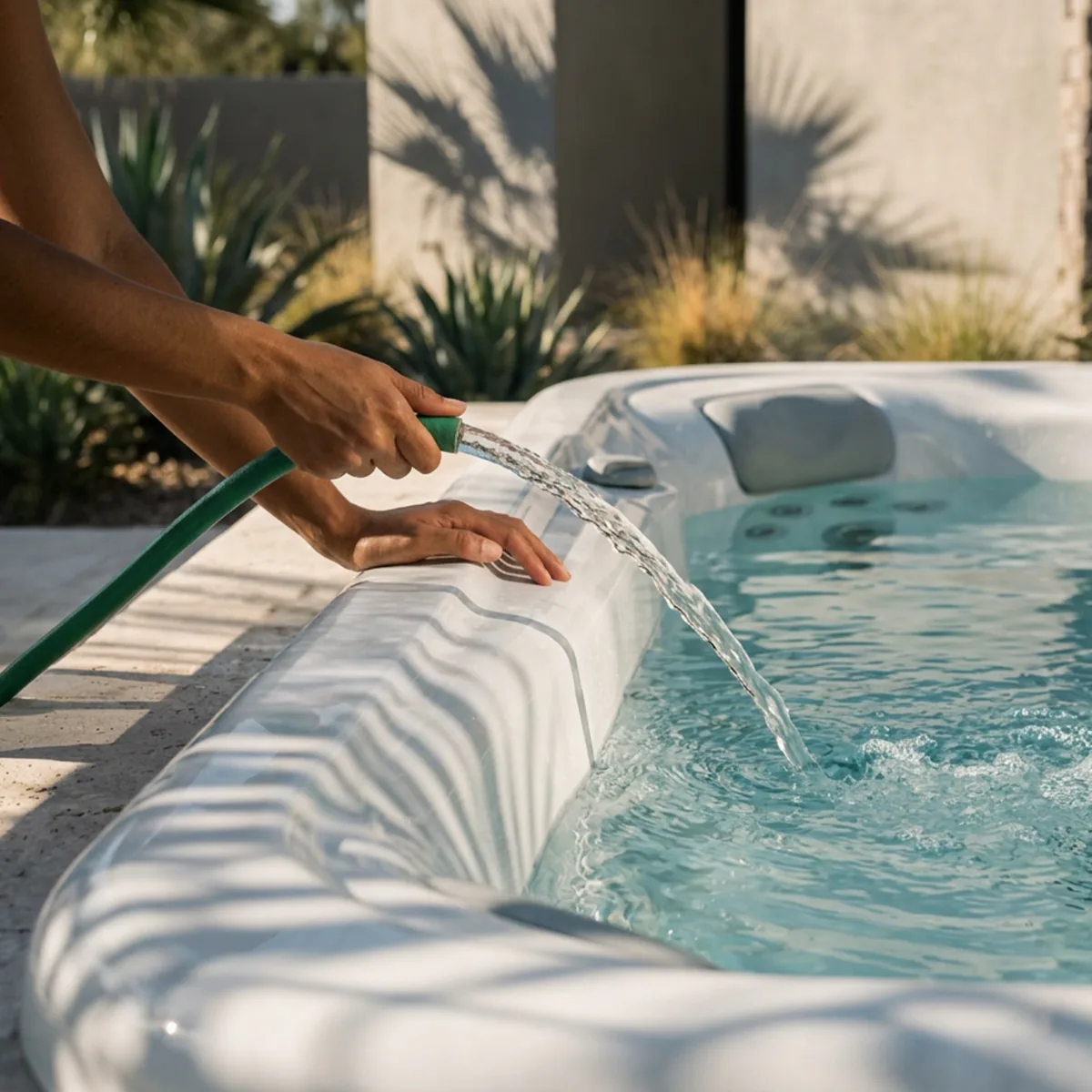
Give the swim spa a final, thorough rinse with a hose, then drain it again.
Expert Tips:
Use a submersible pump (sump pump), placed in the deepest part of the swim spa. Plug it in and turn it on. Turn it off when the water is drained – if it runs dry the motor can burn.
4. Rinse and Drain Again!
A final rinse will get rid of any residual cleaner, which can cause foam when you refill the swim spa – then you’ll have to drain again. And that’s a draining experience!
Use a wet/dry vacuum or spa wand to drain any remaining water.
5. Refill
Refill the swim spa with fresh water. Test it for metals, adjust if needed. Follow the start-up routine your sanitizer product or swim spa retailer recommends to balance your water and then add your sanitizer.
Your swim spa is an investment in your health and well-being, and the water should support that experience. RANA® @facilidad® Sistema de desinfección para piscinas con sistema de natación contracorriente creates Fresh Mineral Water®∞ that stays Cleaner, Clearer and Softer® for longer than the typical 3-month drain-and-refill schedule. Using up to 75% less chlorine* and no cyanuric acid, FROG @ease helps prevent build-up while SmartChlor® and patented FROG Sanitizing Minerals® work together to maintain beautifully clean water.
The result is water that’s easier on your skin, hair and swimwear, so every swim, recovery session and soak feels good.
Sources:
Cs.montana.edu A Brief Introduction to Biofilms
ewg.org Survey finds use of personal care products up since 2004 – what that means for your health
*Compared to the minimum ANSI recommended chlorine level of 2.0 ppm for a swim spa.
∞ Agua más limpia, cristalina y suave para piscinas, jacuzzis y spas de natación.