

If Chlorine Is Too Low
- Shock the pool if the chlorine level is below 0.5 ppm
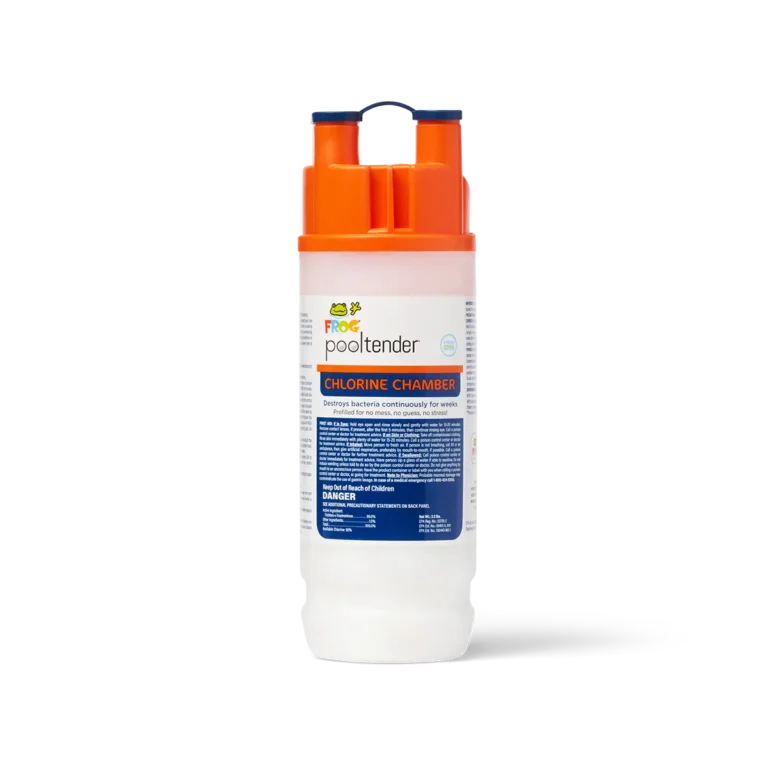
- Inspect the Chlorine Chamber®
- The chamber may be empty and need replacement
- Tablets can sometimes stick together and stop dropping into the water as they dissolve. Remove the chamber and shake it firmly so the tablets settle to the bottom
- If your pool has a low flow rate, try priming the chamber by submerging it in the pool until it partially fills with water before placing in the Cycler
- Adjust the Cycler setting if needed
Only increase the setting if you’re not already at 10 and chlorine remains low:
- Test the chlorine level
- If it is below 1.0 ppm, increase the dial by one setting only
- Retest after 24 hours
- If still low, increase by one more setting
- Repeat until chlorine stays between 0.5–1.0 ppm
- Check circulation and filtration
- The Chlorine Chamber only dispenses chlorine when the pump is running
- Consider increasing pump run time if it is not already operating continuously
- Clean or backwash the filter regularly to maintain proper water flow
- Verify back pressure
- The Cycler performs best with 4–8 psi of back pressure
- Low back pressure can prevent enough water from reaching the chlorine tablets
- Installing a smaller return eyeball fitting can help increase back pressure
- Watch for algae
- Early algae growth can quickly consume chlorine
- Shock the pool, add an algaecide like FROG Pool Tender Algaecide, and brush the pool walls
- Check for nitrates
- Fertilizers can introduce nitrates, which feed algae and rapidly use up chlorine
- Test water near the return jet. If chlorine is present there but not elsewhere in the pool, nitrates may be the issue
- FROG® 90-Day Goodbye Phos® are Pool Pods that help prevent phosphate buildup. Simply drop in the skimmer
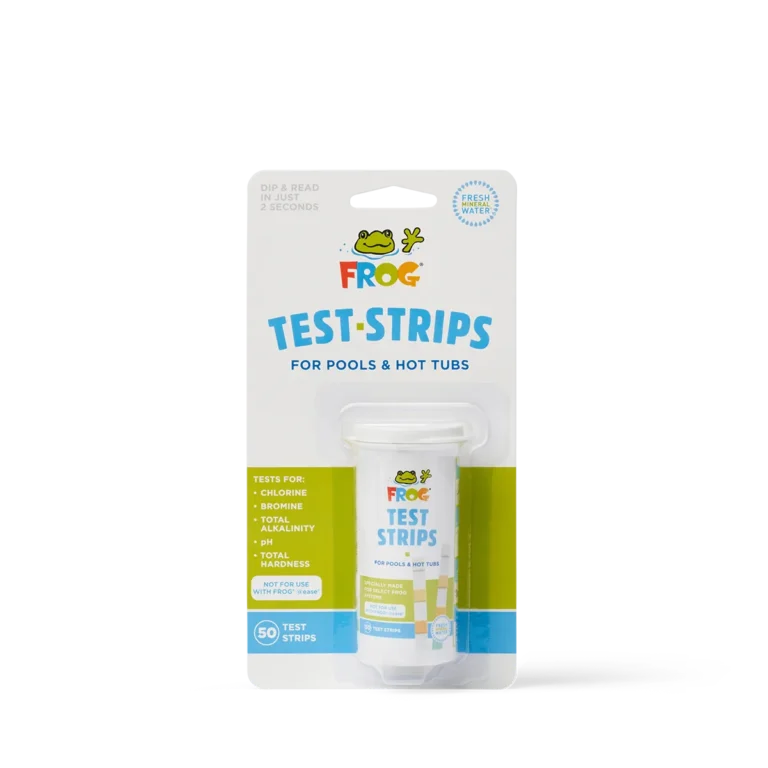
- Verify your test supplies
- Test strips and liquid reagents typically last 12–18 months
- Expired or contaminated test materials can give inaccurate readings
- Avoid handling test strips with wet hands
- Confirm the correct model was installed
- An in-line sanitizer installed in an off-line application may not create enough back pressure
- If this has occurred, the unit should be replaced with the correct off-line model