

If Chlorine Is Too High
- If chlorine is above 3.0 ppm
Remove the chlorine Torpedo Pac® and store it safely away from children, pets, metal objects and open flames. Wait until the level drops to 1.0 ppm. - Adjust the setting
Set your Infuzer® dial setting per the chart in the manual. Monitor daily at first and adjust dial up or down by no more than 1 setting each day to properly monitor the effect. Once you find the setting that maintains a 0.5 to 1.0 ppm level consistently, do not alter it. When abnormal conditions arise (pool party or lots of rain) that’s the time to shock the water. - Balance water
Be sure your water is properly balanced. If the pH is outside of the ideal 7.2-7.6 range the chlorine may not work effectively, even if there is plenty of it in the water. - Consider pool usage
If the pool isn’t used often, it needs less chlorine. Cooler temperatures (like in spring) can also lower chlorine demand. Try turning the dial down further and running the pump less until your normal usage resumes. - Reduce pump run time
Chlorine is dispensed every minute the circulation is running. To cut back on how much is dispensed, add a timer and cut the circulation time. - Test your back pressure
Test your back pressure. Back pressure is the force of water that is pushed back into the FROG Leap Infuzer by the size of the opening in your return. For best results this back pressure should be 4-8 psi. Changing the eyeball fitting in the return to one size larger will decrease back pressure. Avoid special features that are attached to the return such as fountains or lights. - Check the pressure relief valve
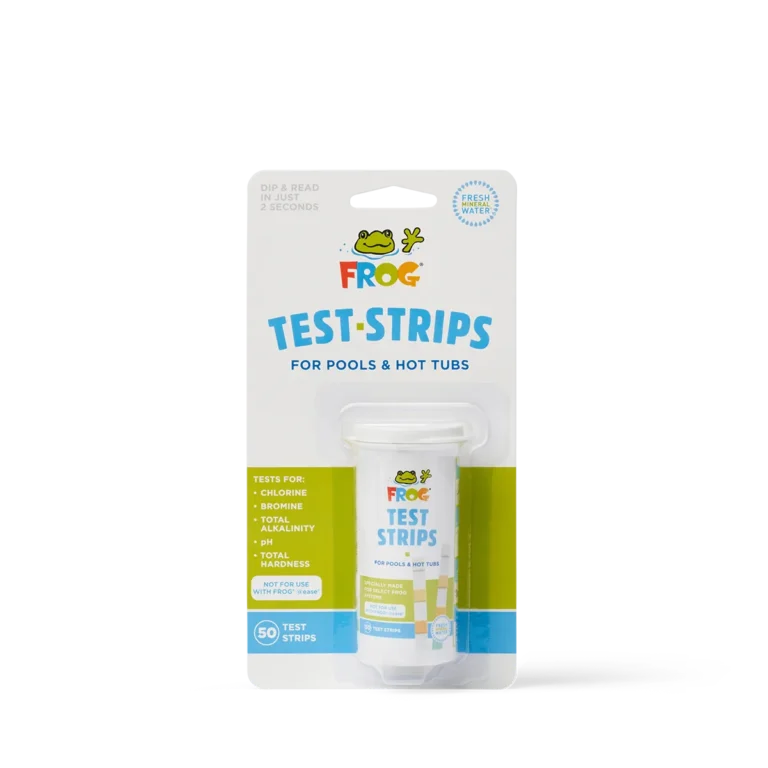
At the bottom inside of the FROG Leap Infuzer is a clear plastic knob that is pushed into a hole. This knob allows gas to burp out of the system when the pump is not running to avoid building up inside the unit. When this valve is missing, it results in uncontrolled water entering the system that could lead to over-chlorination. - Check your test strips or kit
Most test strips and liquid test reagents are only accurate for 12–18 months. After that, they may provide incorrect readings. Also avoid touching test strips with wet hands. Moisture can contaminate the strips and reduce their accuracy.